
Finance Minister Nirmala Sitharaman has called upon Indian industry to prioritise not just scale but also resilience, better governance, and deeper technological capabilities to achieve the 'Viksit Bharat' goal by 2047.

The question for the next 20 years is not whether India can become a $5 trillion or $10 trillion economy. Those are attractive targets, but the real question is whether India can create enough productive jobs, educate its children properly, make its cities liveable, and give hundreds of millions of people a substantially better life, asserts Ramesh Menon.
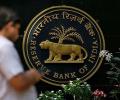
Reserve Bank of India Deputy Governor Rohit Jain has stated that India cannot rely solely on bank balance sheets to fund the extensive investment required for its 'Viksit Bharat' (developed India) goal by 2047, emphasising the critical need for deeper corporate bond, foreign exchange, and derivatives markets.

The Union finance ministry has constituted a high-level committee, chaired by former Central Vigilance Commissioner Suresh N Patel, to recommend structural, regulatory, and legislative reforms for India's banking sector, aiming to make banks globally competitive and support the financing needs of a developed economy.

Union Finance Minister Nirmala Sitharaman announced the government's plan to establish a high-powered committee to examine reforms for the banking sector, aligning it with the vision of a 'Viksit Bharat' (Developed India) and India's next phase of growth.

Can change happen? Not unless the changemakers themselves want it since they benefit the most from the status quo, warns Biswajit Dasgupta.

Prime Minister Narendra Modi, in his 80th Independence Day address, expressed strong confidence that India will achieve developed nation status by 2047, urging citizens to embrace big dreams and unwavering resolve to realise 'Viksit Bharat'. He highlighted India's economic transformation and significant growth in various sectors, including defence production, electronic manufacturing, and mobile phone production.

IMF Managing Director Kristalina Georgieva discusses the potential of artificial intelligence to boost global growth, particularly in India, while also addressing the significant risks of job displacement and financial instability.

Prime Minister Narendra Modi has introduced a 'Sapta Dhara' (seven-stream) reform framework, aiming to propel India into a developed nation by 2047. This comprehensive plan focuses on key sectors including manufacturing, agro-food processing, technology, logistics, defence, green and blue economy, and soft power, leveraging the nation's youth potential.

The third edition of the Viksit Bharat Young Leaders Dialogue (VBYLD) has commenced with a quiz contest, leading to a national finale in January 2027 where young leaders will present their ideas for a developed India to Prime Minister Narendra Modi. The multi-stage event includes essay challenges, district championships, and state-level dialogues, aiming to foster youth participation in nation-building across various thematic areas.

Preeti Lobana, Google India VP, stated on Wednesday that Google views AI as an "economic equaliser" and a democratic technology. Speaking at Google Cloud Day, she highlighted AI's potential to empower businesses, especially SMEs, in India's journey towards Viksit Bharat 2047. Google has committed USD 15 billion to scale India's digital and AI infrastructure, including an AI hub in Visakhapatnam, to support the IndiaAI Mission.
Industry leaders at MRAM Expo 2026 highlighted that India's maintenance economy has the potential to unlock a 1 per cent GDP opportunity. This growth can be achieved by addressing productivity losses from equipment breakdowns, unplanned downtime, and inefficient assets through smarter asset management practices. The NITI Aayog also supports AI-based predictive maintenance for resilient infrastructure, while the Indian Asset Performance Management market is projected for substantial growth by 2033.

The BJP has announced a month-long 'Seva Sankalp Abhiyan' campaign, starting on Prime Minister Narendra Modi's birthday, September 17, to commemorate his 25 years in public life. The initiative includes various programmes like 'Seva Diwas', 'Ashirwad Ka Diya', 'Seva Jyoti Kalash Yatra', youth yatras, and innovation challenges, all aimed at public participation and promoting the vision of 'Viksit Bharat 2047'.

Finance Minister Nirmala Sitharaman's Budget proposals lay out a comprehensive road map for transforming India into a developed nation, focusing on key priorities that aim to generate ample opportunities for all citizens in "Viksit Bharat". It sets the stage for sustained economic growth, social development, and technological advancement.

Indian National Developmental Inclusive Alliance (INDIA) MPs, including Congress president Mallikarjun Kharge, Congress Parliamentary Party chief Sonia Gandhi and Leader of Opposition in the Lok Sabha Rahul Gandhi, staged a protest in Parliament premises on Wednesday over the alleged discrimination against opposition-ruled states in the Union Budget.

Tata Sons Chairman N Chandrasekaran affirmed India's robust economic position amidst global uncertainty, emphasising that energy security, advanced manufacturing jobs, and investment in human capital are 'critical' for sustaining the nation's long-term growth.

India's Next-Gen GST reforms are proving instrumental in driving robust economic growth, simplifying tax compliance, and fostering a more inclusive business environment across the nation, aligning with the vision of a 'Viksit Bharat', writes Finance Minister Nirmala Sitharaman.
Former Chief Economic Adviser Krishnamurthy V Subramanian outlines India's strategy to become a USD 55 trillion economy by 2047. The plan hinges on leveraging its young demographic in AI, dominating sunrise sectors like space and defence tech, attracting FDI, and achieving sustained 8% GDP growth.

Prime Minister Narendra Modi launched the 'We Will Do It' slogan, aiming for India to become a developed nation by 2047 through visionary policies and hard work, while also addressing the challenge of societal division.

Union Finance Minister Nirmala Sitharaman expressed strong confidence in India achieving over 10 per cent economic growth, advocating for increased technology adoption and innovation. She urged overcoming scepticism and highlighted technology's transformative role in agriculture and public sector reforms, while also launching a new fund and book at an IIT Madras event.

Elections are not won or lost by expounding on such macro-economic matters. For the aam admi, what matters in manifestos are promises that will improve their quality of life, notes Vinayak Chatterjee.

Prime Minister Narendra Modi has urged states to balance the opportunities presented by artificial intelligence with the need to safeguard against social challenges like cyber fraud and drug abuse. He also warned of the risks posed by El Nino conditions, calling for stronger water conservation measures and emphasising the collective resolve towards a 'Viksit Bharat'.

The BJP has strongly criticised Congress leader Rahul Gandhi for his comments on the Indian economy made at Columbia University, where he described India as facing an "economic disaster." The ruling party accused Gandhi of engaging in "anti-India propaganda" and repeatedly portraying the nation negatively on foreign soil, despite global agencies recognising India as a fast-growing economy. BJP leaders highlighted India's economic progress and questioned Gandhi's motives for undermining the country's image internationally.
Economists highlight that resolving domestic policy bottlenecks, particularly through land reforms and improving the ease of doing business, will be critical for Prime Minister Narendra Modi's 'next-generation reforms' and India's economic transformation towards its 'Viksit Bharat' vision for 2047.
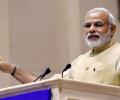
Prime Minister Narendra Modi, in his Independence Day address, highlighted technology and innovation as central to India's goal of becoming a developed nation by 2047. He called for India to lead in emerging technologies like AI, quantum computing, and space, announcing a massive AI skilling initiative for one crore youth. Modi stressed the importance of becoming a global innovation hub, bolstering energy security with nuclear power, and strengthening cybersecurity.

The Budget reflects a clear focus on strengthening India's long-term prospects by leaning on nation-building sectors such as infrastructure, manufacturing, and technology while maintaining fiscal responsibility.

A research paper by the National Council of Applied Economic Research (NCAER) recommends that Bihar revoke its alcohol ban, citing its failure to reduce violence against women and a rise in illicit drug and alcohol consumption. The report suggests that reinstating the liquor excise tax would significantly increase state revenues and decrease enforcement costs.

A NITI Aayog report indicates that India's digital public infrastructure (DPI) initiatives could contribute 4 per cent of the GDP by 2030, a significant increase from the current 1 per cent.

A joint study by IBM and IndiaAI, a MeiTY initiative, indicates that Artificial Intelligence (AI) has the potential to contribute over USD 500 billion to India's economy by 2030. The report highlights the need for improved AI literacy, infrastructure, and data quality to fully realise this potential.
A NITI Aayog report indicates that India's digital public infrastructure (DPI) initiatives are projected to contribute significantly to the nation's GDP, potentially reaching 4 per cent by 2030.

That means making it easier to invest, protecting investors through predictable rules, and avoiding policy reversals after investments have been made, notes Rajeswari Sengupta.

Despite current headwinds, India remains the world's fastest-growing major economy and should not allow near-term challenges to obscure its long-term growth potential, said Jane Fraser, Citi Chair and Chief Executive Officer.

In her address to the nation on the eve of the country's 80th Independence Day, the president stressed that just as government and society remain united to ensure national security, everyone must contribute through joint and concerted efforts to safeguard the present and future of students.

Kumar Mangalam Birla urged young people to 'build in India, build for India and build for the world'.

The "huge mountain of debt" in developed economies and the risk of a possible unravelling is a matter of concern for India, Union Minister for Railways, Information & Broadcasting, Electronics & Information Technology Ashwini Vaishnaw said on Wednesday, pointing to the recent spike in Japanese bond yields.

'This Budget has a one-year agenda, which you can call the sprint, and the marathon is towards Viksit Bharat.'

'Improved law and order and transparent governance have helped change UP's investment image.'
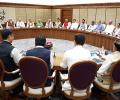
'The expeditious enactment of labour codes and strategic measures to bridge the skills jobs gap are critical.'

BJP MP C Sadanandan Master addressed the Rajya Sabha, appealing for unity and highlighting the government's achievements while raising concerns about migration in Kerala.

President Droupadi Murmu addressed the nation on the eve of Republic Day, emphasising India's role in promoting peace, the empowerment of women, and the country's economic growth.
